Service Times

4/3/26
Good Friday
No Childcare Available
@ 5:30 & 7:00 pm

4/4/26
Easter Saturday
@ 4:00 & 6:00 pm

4/5/26
Easter Sunday
@ 8:00, 9:30 & 11:00 am

Holy Week Devotionals

Matthew 21:1–11; Mark 11:1–11; Luke 19:28–44; John 12:12–19

1 As they approached Jerusalem and came to Bethphage on the Mount of Olives, Jesus sent two disciples, 2 saying to them, “Go to the village ahead of you, and at once you will find a donkey tied there, with her colt by her. Untie them and bring them to me. 3 If anyone says anything to you, say that the Lord needs them, and he will send them right away.” 4This took place to fulfill what was spoken through the prophet: 

5 “Say to Daughter Zion, ‘See, your king comes to you, gentle and riding on a donkey, and on a colt, the foal of a donkey.’ ” 

6 The disciples went and did as Jesus had instructed them. 7 They brought the donkey and the colt and placed their cloaks on them for Jesus to sit on. 8 A very large crowd spread their cloaks on the road, while others cut branches from the trees and spread them on the road. 9 The crowds that went ahead of him and those that followed shouted, “Hosanna to the Son of David!” “Blessed is he who comes in the name of the Lord!” “Hosanna in the highest heaven!” 10 When Jesus entered Jerusalem, the whole city was stirred and asked, “Who is this?” 11 The crowds answered, “This is Jesus, the prophet from Nazareth in Galilee.”

By the time Jesus enters Jerusalem on Palm Sunday - the first day of Holy Week - the city is alive with excitement and anticipation. The population of the city had doubled, or even tripled, as Jews descended on Jerusalem from miles around to celebrate the Passover. And with memories of that dramatic rescue fresh in their minds, the gathered crowds wondered if perhaps another rescue was imminent. This time it wouldn’t be a rescue from slavery in Egypt, but a rescue from Roman oppression in their beloved holy city. 

The hated Romans knew this was a moment fraught with revolutionary sentiment, so much so that one of their governors, Pilate, had made his way into town to make sure the Jewish pilgrims who had come to town didn’t get too unruly. 

And it is into this environment of messianic hope that Jesus arrives. He comes riding on a donkey, a direct fulfillment of Zechariah 9:9, “Rejoice greatly, O daughter of Zion! Shout aloud, O daughter of Jerusalem! Behold, your king is coming to you; righteous and having salvation is he, humble and mounted on a donkey, on a colt, the foal of a donkey.” This would have been an unmistakable sign to the gathered crowd: their promised king had come. 

The response of the crowd is one befitting a royal arrival. They spread their cloaks along the road in the same way their ancestors did at the anointing of King Jehu (2 Kings 9), and they laid down palm branches, an ancient symbol of victory dating back to the Maccabean revolt. These actions were accompanied by the cry of, “Hosanna!”, which literally means, “Save us!” 

However, this cry was not a cry for salvation from sin. It was a call for a political rescue. This crowd wanted Jesus to drive out the Romans and retake Jerusalem for the Jewish people. This was, perhaps, a noble desire. But that is not why Jesus came. His agenda was not to claim political power, but to bring about transformation through suffering love. He didn’t come to bring political freedom, but rather freedom from the power of sin and death.

The crowd wanted one thing, Jesus offered another. Jesus, of course, knows what we need most. Our sin has separated us from God, and there is nothing we need more than a restored relationship with him. He offers us the greatest kind of breakthrough there is: Forgiveness and freedom from sin. But in the course of stressful, busy lives, other needs feel more pressing and urgent. For the Jews of Jesus’ day, political freedom felt most necessary. They had pinned their hopes on a messiah who could deliver that. It’s easy for us to pin our hopes on a messiah who meets the needs that are most pressing to us. The truth is, Jesus is so kind and loving that he doesn’t bend his agenda to match ours. This might disappoint us in the moment, but it is for our lasting good. 

So then, as we consider the response of the crowd on Palm Sunday, it leaves us with a few questions: 

  • What do we really want from Jesus? There is nothing wrong with asking him to meet other needs, but what do we really want most? 

  • Where have we allowed our expectations of God get in the way of knowing God for who he really is?

Let’s Pray: Heavenly Father, we confess that we often come to you like the crowds on Palm Sunday. We’re full of zeal and enthusiasm, but we’re also full of ideas of what you should do for us. Thank you that you know what we need most - mercy, grace, forgiveness, and freedom from sin - and that you offer those things to us freely. May we receive those gifts with wonder. We trust that your agenda is better than ours, and we joyfully submit ourselves to you today. In Jesus’ name, amen.

Written by Pastor Brian Kiley

Matthew 21:12–13 (see also Mark 11:15–17; Luke 19:45–46; John 2:13–16)

12 And Jesus entered the temple courts and drove out all those who were selling and buying in the temple, and overturned the tables of the money changers and the chairs of those who were selling doves. 13 And he said to them, “It is written, ‘My house will be called a house of prayer,’ but you have made it a cave of robbers!”

As we learned from yesterday’s devotional, Matthew’s narration of Holy Week begins with Jesus arriving in Jerusalem, a city teeming with celebration—and confusion. Crowds chant, “Hosanna to the Son of David!” while others wonder, “Who is this guy?” But what makes this scene provocative is Jesus’ entry on a donkey. It comes straight from Zechariah’s prophetic playbook: this sign reveals the messiah, the heir to David’s throne (Zech 9:9; Is 62:11). After centuries of waiting and hoping, breakthrough has arrived, a new king is here. That’s gospel (good news) to some, treason to others.

With the echoes of celebration fresh in our ears, Matthew immediately shifts scenes, placing Jesus in the temple’s outer court where he wastes no time. Furiously, he starts tossing tables. He barks rebukes. He unleashes a whip on the money changers and merchants (Jn 2:15).

Imagine the disciples’ confusion at their rabbi’s sudden outburst: Lord! What’s the meaning of this? Why are you doing this? Why are you so angry?

All four Gospels remember this scene—how could they forget it—yet none record a single word spoken by the disciples in that moment. Perhaps the questions we imagine swirled in their heads, but the fourfold Gospel witness points to one thing: the disciples were stunned to silence.

It’s a side of Jesus they’ve never seen. And never expected.

Only John lets us in on their private ruminations: “His disciples remembered that it is written, ‘Zeal for your house will consume me’” (Jn 2:17). Their rabbi just gave them a visual of Psalm 69:9.

So, why is Jesus so enraged? Jesus came to bring breakthrough and found breakdown.

The religious leadership had commodified Passover and the necessary acquisition of sacrificial offerings on temple grounds, in sacred space. What should be a house of prayer had become a cave of robbers, an exchange for economic ambition. The means of compromise justifying the ends of profit. And Jesus wants no part of that.

What’s even more tragic, Jesus stands alone in his zeal, whip in hand, heart racing, breathing labored. Why does he stand alone? Why does no one else see the problem?

This is the reality of the human condition, isn’t it? We repeat the breakdown Jesus witnessed 2000 years ago in the Jerusalem temple court. An honest look at Jesus’ confrontation with human breakdown invites humble reflection, especially as we journey through Holy Week and toward the cross, the pinnacle provision of breakthrough.

So, here are a few honest questions today’s devotional raises for us:

  • How have we allowed our zeal for God’s house to breakdown?

  • How have we compromised the temple of our hearts and allowed devotion to kings other than Jesus to crowd out holy and righteous living?

  • What would breakthrough look like, in our lives and our world, if we stood with Jesus in his zeal for righteousness?

Let’s pray: Holy and gracious Lord, search my heart and know me. Give me an honest look at my heart, my commitments, and my compromises. Grant me a clear vision of your righteousness and then overturn the tables that prop up anything that does not align with it. Cleanse the temple of my heart so that my life may be called a life of prayer and known by the good works you have set before me. Make me more like you. Thank you for your unwavering loyalty to my transformation. I trust and submit to you. In Jesus’s name, amen.

Written by Pastor Anthony Lipscomb

Matthew 21:23–27; Mark 11:27–12:7; Luke 20:1–15

23 And when he entered the temple, the chief priests and the elders of the people came up to him as he was teaching, and said, ‘By what authority are you doing these things, and who gave you this authority?’ 24 Jesus answered them, I also will ask you one question, and if you tell me the answer, then I also will tell you by what authority I do these things. 25 The baptism of John, from where did it come? From heaven or from man? And they discussed it among themselves, saying, ‘If we say, ‘From heaven,’ he will say to us, ‘Why then did you not believe him?’ 26 But if we say, ‘From man,’ we are afraid of the crowd, for they all hold that John was a prophet.’ So they answered Jesus, ‘We do not know.” And he said to them, ‘Neither will I tell you by what authority I do these things.

A mere one day after Jesus had cleared the place out in an indictment of a corrupted religious system, Jesus is back in the temple. Rather than sneak around and avoid the ire of the powerful people he’d offended, Jesus returns to the scene and begins to teach. We don’t know what he said, but we know it was enough to catch the attention of the temple elites, who immediately asked him about his authority. 

This isn’t a good faith question. They aren’t seeking information, they are laying a trap for Jesus to incriminate himself. Jesus refuses to take the bait, and instead presents a trap of his own by questioning them about the baptism of John the Baptist. A question about baptism wasn’t merely about getting into the water, but was about the authority that undergirded John’s entire ministry. Furthermore, since John was a forerunner to Jesus, they share the same authority. Jesus, in brilliant rabbinic fashion, is taking the question posed to him and putting it back on them. 

The religious leaders immediately know they are stuck. They can’t acknowledge that John is a divinely sent messenger, but if they say his authority is merely human, they risk enraging the crowds who regarded John as a prophet. An enraged crowd would have provoked a swift response from the Romans, which would have been intolerable to the religious leaders. 

Out of options, the religious leaders say they don’t know. Jesus, true to his word, thus refuses to answer their question. This exchange is one example among many of Jesus’ power. The same one who calms the sea and heals the lame is also able to demonstrate his authority by evading the rhetorical traps of those who would seek his downfall. 

This story reminds us that Jesus is never stuck, never caught off guard, never in a hurry, and never backed into a corner. He is always in control, and his plans will not be thwarted by questions and challenges from outsiders. This passage also serves to remind us of Jesus’ brilliance. As Dallas Willard writes in The Divine Conspiracy, “He is not just nice, he is brilliant. He is the smartest man who ever lived. He is now supervising the entire course of world history while simultaneously preparing the rest of the universe for our future role in it. He always has the best information on everything and certainly also on the things that matter most in human life.” We can trust him with our lives because he is endlessly competent and incomparably wise.

In a few short days, we will remember Jesus’ death on the cross. And yet, even in that moment, Jesus knew what he was doing. Referring to his own life in John 10, Jesus said, “No one takes it from me, but I lay it down on my own accord.” (John 10:18). 

Let us remember today that, while life sometimes feels out of control to us, it is never out of control to Jesus. In light of that, here are a few questions for us to reflect on: 

  • What does it mean to you that Jesus is brilliant? How can his brilliance help us trust him? 

  • Is there an area of your life that feels out of control? Take time to submit that area of your life to him and seek his guidance. 

Let’s pray: Jesus, we thank you for all of the different ways you show your power. Thank you that we can trust you with our whole lives because you are perfect in power. We confess that we often feel weak and out of control, but we remember your words to the Apostle Paul, that your power is made perfect in weakness. Help us learn what it means to trust you completely. We pray these things in your name, amen.

Written by Pastor Brian Kiley

Matthew 26:1–16; Mark 14:1–11; Luke 22:3–6

1 When Jesus had finished all these sayings, he said to his disciples, 2 “You know that after two days the Passover is coming, and the Son of Man will be delivered up to be crucified.”

3 Then the chief priests and the elders of the people gathered in the palace of the high priest, whose name was Caiaphas, 4 and plotted together in order to arrest Jesus by stealth and kill him. 5 But they said, “Not during the feast, lest there be an uproar among the people.”

Jesus Anointed at Bethany

6 Now when Jesus was at Bethany in the house of Simon the leper, 7 a woman came up to him with an alabaster flask of very expensive ointment, and she poured it on his head as he reclined at table. 8 And when the disciples saw it, they were indignant, saying, “Why this waste? 9 For this could have been sold for a large sum and given to the poor.” 10 But Jesus, aware of this, said to them, “Why do you trouble the woman? For she has done a beautiful thing to me. 11 For you always have the poor with you, but you will not always have me. 12 In pouring this ointment on my body, she has done it to prepare me for burial. 13 Truly, I say to you, wherever this gospel is proclaimed in the whole world, what she has done will also be told in memory of her.”

Judas to Betray Jesus

14 Then one of the twelve, whose name was Judas Iscariot, went to the chief priests 15 and said, “What will you give me if I deliver him over to you?” And they paid him thirty pieces of silver. 16 And from that moment he sought an opportunity to betray him.

We have followed Jesus from his donkey ride into Jerusalem (Palm Sunday), to his cleansing of the temple courts (Monday), to his confrontation with the chief priests and elders at the temple (Tuesday), and now to the deal that finances Jesus’ death, a scene traditionally commemorated by the Church on Spy Wednesday.

But before we consider the Spy Wednesday passage of Mt 26:1–16, let’s set the stage by tracing the events leading up to this pivotal scene.

After Jesus had foiled the religious leaders’ attempt to entrap him with a question of John the Baptist’s authority, he remained at the temple, preaching the kingdom of God to the crowds (Mt 21:28–22;14), debating and rebuking the Pharisees and Sadducees (Mt 22:15–23:36), and lamenting over Jerusalem’s history of defiance toward God and his prophets (Mt 23:37–39).

When Jesus finally leaves the temple, the disciples with him marvel at its monumental size. But to their surprise, Jesus foretells the temple’s destruction—one day the holy city will burn in ruin (Mt 24:1–2).

From there, Jesus leads the disciples up the Mount of Olives where they find a spot on the slope to sit. It’s been an eventful day to say the least. There, overlooking Jerusalem to their west, the disciples ask Jesus to explain when the temple will fall and when he will finally usher in a new era. And so, in a scene known as the “Olivet Discourse,” Jesus foretells what is to come, though he continues to speak in riddles and parables (Mt 24:3–25:46).

With the close of the Olivet Discourse, we turn the page to Matthew 26, where a pivotal development unfolds, marking the beginning of the end.

Sitting on the Mount of Olives, Jesus tells the disciples that the “Son of Man” will soon be crucified. Simultaneously, somewhere in Jerusalem, the chief priests and elders gather in the palace of Caiaphas, the high priest, to plot Jesus’ arrest and death (Mt 26:1–5). Two conversations—one sincere, one sinister. Two locations—one humble, one haughty. Both anticipate one death.

Matthew teases out this duality in the verses that follow. In a first scene, an unnamed woman arrives at Simon the leper’s house in Bethany with a jar of fragrant oil worth a year’s wages, and she pours it on Jesus’ head (Mt 26:6–13; Mark 14:5; John 12:5). The disciples call her act a “waste,” but Jesus, absorbing not only the oil in his hair and skin but the symbolism of the moment, defines her act as kalos, “beautiful.” Kalos is the same word Jesus uses to speak of “good” works that bring glory to God: “let your light shine before others, so that they may see your good (kalos) works and give glory to your Father who is in heaven” (Mt 5:16).

Yet, in the shadows of kalos devotion, betrayal is afoot. Judas steals away, and for thirty pieces of silver, a month’s wages, he cuts a deal with the chief priests to deliver Jesus into their hands (Mt 26:14–16).

Two followers—one unnamed woman, one named man. Two prices—one extravagant, one moderate. Two acts—one devotion, one betrayal. Both centered on the same messiah.

For the believer, the duality of Matthew’s narrative captures our human struggle with sin. Often, we live in contradiction, and we beat ourselves up for it. The Apostle Paul admitted the struggle in his own life: “For I do not understand my own actions. For I do not do what I want, but I do the very thing I hate… Wretched man that I am! Who will deliver me from this body of death?” (Rom 7:15, 24).

Some days we’re the unnamed woman. Other days we are Judas. Every day we need God’s grace. But here’s the thing about grace that’s often forgotten—you don’t earn it, you don’t have to suffer for it, to beat yourself up for it, to prove you deserve it. If you had to do any of that, it wouldn’t be grace.

You might know this truth in theory but struggle to live as if it’s real for you. The enemy wants nothing more than to see a child of God living as if they were disowned.

If this sounds like your story, then perhaps breakthrough looks like freedom to walk in the fullness of God’s grace. Perhaps it looks like the Apostle Paul, who, after admitting his own struggle with sin, declares in the same breath, “Thanks be to God through Jesus Christ our Lord! … There is therefore now no condemnation for those who are in Christ Jesus” (Rom 7:25–8:1).

Take time to contemplate the following questions in conversation with the Spirit:

  • What have been some “unnamed woman” moments in my life, where I sensed the loving nearness of Christ?

  • Where do I trade loyalty to Christ for earthly pleasure or gain?

  • What’s holding me back from walking in the freedom of the Father’s grace?

Let’s pray: Gracious Father, like the Apostle Paul, sometimes I just don’t understand myself. Sometimes I’m the unnamed woman, serving you faithfully. Other times I’m Judas, messing up. In fact, I can be pretty wretched. I want to make you proud by how I live, think, and speak, but then I do the very opposite of what is good, what is kalos. So, I need your grace. Teach me to live in faithful obedience, and send me encouragement along the way, so that I can be like Paul, able to lament my sin while confident in your kindness toward me. I want to live in the full freedom of your grace, secure in my identity as your child. So, I’m trusting you, Lord, because you never fail. Receive my prayer in Jesus’ name, amen.

Written by Pastor Anthony Lipscomb

Matthew 26:20–29; Mark 14:17–21; John 13:21–30

20 When it was evening, he reclined at table with the twelve. 21 And as they were eating, he said, “Truly, I say to you, one of you will betray me.” 22 And they were very sorrowful and began to say to him one after another, “Is it I, Lord?” 23 He answered, “He who has dipped his hand in the dish with me will betray me. 24 The Son of Man goes as it is written of him, but woe to that man by whom the Son of Man is betrayed! It would have been better for that man if he had not been born.” 25 Judas, who would betray him, answered, “Is it I, Rabbi?” He said to him, “You have said so.” 26 Now as they were eating, Jesus took bread, and after blessing it broke it and gave it to the disciples, and said, “Take, eat; this is my body.” 27 And he took a cup, and when he had given thanks he gave it to them, saying, “Drink of it, all of you, 28 for this is my blood of the covenant, which is poured out for many for the forgiveness of sins. 29 I tell you I will not drink again of this fruit of the vine until that day when I drink it new with you in my Father’s Kingdom.

Now we come to Maundy Thursday, the day Jesus institutes the Lord’s Supper. Following this event, Jesus will go to Gethsemane and pray, and the anguish of the moment will lead to him sweating drops of blood. But in this scene, Jesus has gathered with his closest disciples to do what tens of thousands of others were doing in Jerusalem on that day: celebrate the Passover. Jesus begins the meal with a startling announcement of a coming betrayal. This seemingly unimaginable occurrence catches the disciples off guard. It provokes immediate paranoia, as they all wonder if they will be the betrayer. 

After Jesus warns of impending judgment for the guilty party, Judas speaks up. He calls Jesus, “rabbi.” What appears to be a term of respect is anything but. In Matthew’s gospel, only Jesus’ opponents call him by that title. Everyone else in the room calls him “Lord.” Jesus, of course, already knew Judas’s intentions, but his words of faux-respect make them clear. 

Remarkably, with Judas still present, Jesus proceeds with the celebration of the Passover, and in so doing institutes the Lord’s Supper. He distributes the bread and calls it his body, and then passes around the wine and calls it his blood. As he does this, he announces a new covenant, whereby the shedding of Jesus’ blood on the cross absorbs God’s wrath toward sin and opens a way for people to be saved. This draws to mind the promises of Jeremiah 31:31-34 where God promises, 

“Behold, the days are coming, declares the Lord, when I will make a new covenant with the house of Israel and the house of Judah, not like the covenant I made with their fathers on that day when I took them by the hand to bring them out of the land of Egypt, the covenant they broke, though I was their husband, declares the Lord. For this is the covenant that I will make with the house of Israel after those days, declares the Lord: I will put my law within them, and I will write it on their hearts. And I will be their God, and they shall be my people. And no longer shall each one teach his neighbor and each his brother, saying, ‘Know the Lord, ’ for they shall all know me, from the least of them to the greatest, declares the Lord. For I will forgive their iniquity, and I will remember their sin no more.”

This new covenant has now arrived, and it will be sealed by the blood of Jesus. The sacrificial system will be done away with, as Jesus’ blood will bring about forgiveness of sins once and for all. Jesus, utilizing the symbols of the centuries-old celebration of the Passover, shows himself to be the fulfillment of everything that celebration symbolized. And Jesus declares these truths with the one who would ultimately betray him sitting in the room. 

The invitation present in that first Lord’s Supper remains available to all of us today. We are invited to participate in this new covenant reality, forgiven by Jesus’ blood and strengthened by his body to give our lives to his service. In light of this, here are a few questions to consider: 

  • Are there any ‘old covenant’ ways of thinking that I am hanging on to? In other words, am I continuing to believe that my standing before God is earned by my obedience rather than received by faith? 

  • Whether you’ve never taken it, or you’ve taken it hundreds of times, what does the Lord’s Supper mean to you?

  • What is the difference between calling Jesus our lord and calling him our rabbi? Which is he to you? 

Let’s pray: Heavenly Father, we thank you for the new covenant that has been sealed by the blood of Jesus. We thank you that we have been cleansed from our sin and our relationship with you has been restored. We pray that you would give us such an awareness of your grace and love toward us that we would respond with lives of joyful obedience. Thank you that, despite our sin and rebellion, you have loved us perfectly. We pray in Jesus’ name, amen.

Written by Pastor Brian Kiley

Matthew 27:32–44; Mark 15:21–32; Luke 23:26–43; John 19:16–27

32 As they went out, they found a man of Cyrene, Simon by name. They compelled this man to carry his cross. 33 And when they came to a place called Golgotha (which means Place of a Skull), 34 they offered him wine to drink, mixed with gall, but when he tasted it, he would not drink it. 35 And when they had crucified him, they divided his garments among them by casting lots. 36 Then they sat down and kept watch over him there. 37 And over his head they put the charge against him, which read, “This is Jesus, the King of the Jews.” 38 Then two robbers were crucified with him, one on the right and one on the left. 39 And those who passed by derided him, wagging their heads 40 and saying, “You who would destroy the temple and rebuild it in three days, save yourself! If you are the Son of God, come down from the cross.” 41 So also the chief priests, with the scribes and elders, mocked him, saying, 42 “He saved others; he cannot save himself. He is the King of Israel; let him come down now from the cross, and we will believe in him. 43 He trusts in God; let God deliver him now, if he desires him. For he said, ‘I am the Son of God.’” 44 And the robbers who were crucified with him also reviled him in the same way.

It’s Good Friday. Jesus’ thirty-three-year journey from his birth in Bethlehem, to growing up in Nazareth, to launching his ministry in Galilee, and to his eventual arrival in Jerusalem has been leading up to the most excruciating day of his life—emphasis on excruciating because it derives from crux, the Latin word for cross.

By the time we reach Matthew 27:32–44, Jesus has been betrayed, detained, interrogated, and tortured. He’s sleep deprived, hungry, dehydrated, and battered. Now, he must take his last steps to Golgotha where his executioners and mockers await his crucifixion.

Matthew’s passage echoes not only the Hebrew Scriptures, such as Psalms 22 and 69, but also Jesus’ arrival in Jerusalem at the start of Holy Week. The placard placed over Jesus’ head, which read, This is Jesus, the King of the Jews, echoes the royal title Son of David that the crowds sang to welcome Jesus to the city. Spectators mocked Jesus, shouting, Save yourself, recalls the shouts of Hosanna (“save us”) at his triumphal entry.

Jesus’ old nemeses, the chief priests and elders, join the spectacle. They deride Jesus, saying, He saved others; he cannot save himself. He is the King of Israel; let him come down now from the cross, and we will believe in him.

Spectators and religious leaders revile Jesus in unison and question his identity as the Son of God. In a matter of days, the events of Holy Week have come full circle; the crowds that hailed Jesus as the long-awaited Davidic king now condemn him to a criminal’s death.

What’s to come of the kingdom of heaven that this Jesus preached so fervently? Is he really who he says he is? These are the questions we ask when our definitions of power fail to account for strength that sacrifices self rather than others.

In his own words, Jesus defines his power over life and death in self-sacrificial terms: “I am the good shepherd. The good shepherd lays down his life for the sheep… No one takes it from me, but I lay it down of my own accord. I have authority to lay it down, and I have authority to take it up again” (Jn 10:11, 18).

Though it was the darkest day in human history, Good Friday is good because Jesus exercised the most brilliant and costly kingship imaginable. It was brilliant because it never conformed to the wisdom of this world, and it was costly because its currency was the king’s very life.

As we sit in the darkness of Good Friday, we pause to invite the Holy Spirit to illuminate our need for repentance and to impress upon our hearts the gravity of Jesus’ costly kingship.

  • What patterns of sin do I need to surrender to Jesus?

  • How do I minimize the weight of Jesus’ sacrifice in my own life?

  • How well does my definition of power align with Jesus’ definition?

Let’s pray: Sovereign Lord, you reign from everlasting to everlasting. To your kingdom there will be no end. Help me to align my loyalties to your authority. Reveal to me my misplaced trusts, my values that contradict yours, and the ways I fail to take seriously your work of grace in my life. Teach me to live according to your definition of power as revealed in your word. Lead me in paths of righteousness for your name’s sake. Thank you that you do not forsake me even when I stumble. Thank you for being eager to restore me to right relationship with you. And thank you for your brilliant and costly kingship. To you, Jesus, I pray, amen.

Written by Pastor Anthony Lipscomb
Matthew 27:3–10 (Judas’s aftermath); Matthew 27:51–61 (Jesus' burial); Matthew 27:62–66 (The Guard at the Tomb)

62 The next day, that is, after the day of Preparation, the chief priests and the Pharisees gathered before Pilate 63 and said, “Sir, we remember how that impostor said, while he was still alive, ‘After three days I will rise.’ 64  Therefore order the tomb to be made secure until the third day, lest his disciples go and steal him away and tell the people, ‘He has risen from the dead, ’ and the last fraud will be worse than the first. ” 65 Pilate said to them, “You have a guard of soldiers. Go, make it as secure as you can. ” 66 So they went and made the tomb secure by sealing the stone and setting a guard.

Holy Saturday. For us, who know what happened on Sunday, this is a day of waiting. It’s a time to sit in the grief of Jesus’ death as we await the celebration of his resurrection. But for Jesus’ original followers, there was no waiting. There was only hopelessness. The one they called their lord had died. He was supposed to free them from the Romans, but instead, his fate was no different than others who had come before him with the audacity to challenge Rome. He was dead and hope was lost. 

Unsurprisingly, Scripture is scant on details about what took place on Saturday. In fact, the passage above is the only passage in the four gospels that narrates events of that day. Jewish officials, concerned that Jesus’ disciples would steal the body and claim a resurrection had taken place, implored Pilate to deploy a guard to watch over the tomb. He, in turn, ordered them to make it secure, which they did. That’s all Scripture says. 

Something is lost if we miss the grief of Holy Saturday. The day invites us to imagine a world where sin had not been forgiven, death had not been defeated, and Jesus was just another failed prophet. It invites us to imagine the plight of the disciples, who had left everything to follow Jesus only to watch him die. What would become of them? Where would they go from here? We are invited to sit alongside them in mourning, uncertainty, and fear. 

The contrast between Holy Saturday and Easter Sunday could not be greater. Sunday marks the greatest event in human history. But let us not rush past Saturday. Let us sit in the quiet. Let us imagine the heartbreak. Let us, if only for a day, feel the darkness. It will only make the joy of Easter shine that much brighter. 

Here are a few questions to consider: 

  • What emotions do you feel as you contemplate Holy Saturday? 

  • How can remembering the reality of that first Holy Saturday make our celebration of Easter that much better? 

Let’s pray: Heavenly Father, on this Holy Saturday we sit in the darkness of Jesus’ death. We imagine what the disciples would have felt, and we consider the awful reality of a world where death had not been defeated and we remained separated from you. We look forward to the celebration of resurrection that is to come. But today we mourn, we remember, and we wait. In Jesus’ name we pray. Amen.

Written by Pastor Brian Kiley

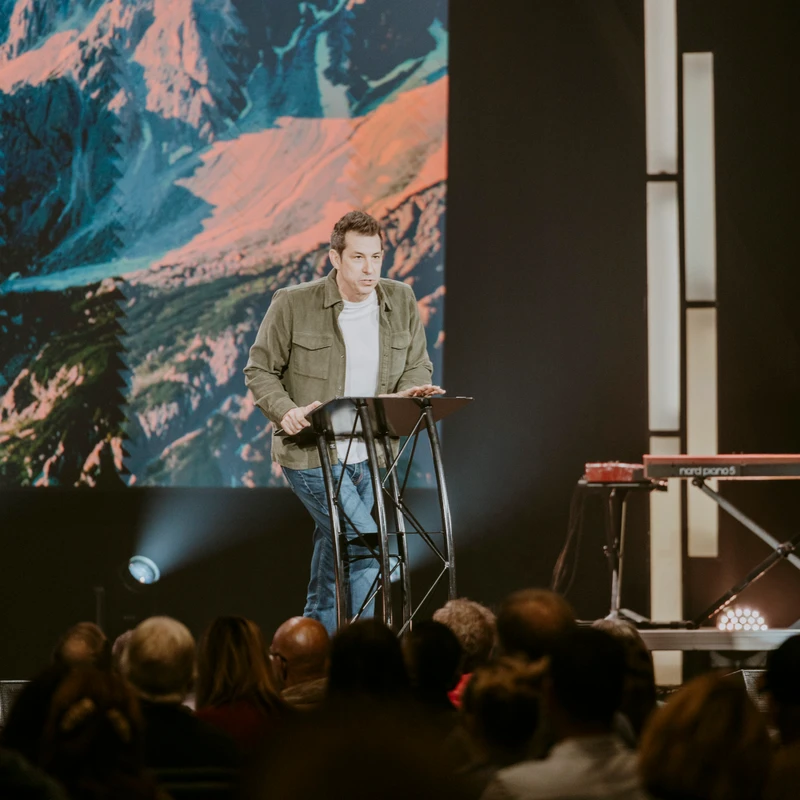
Authentic, Passionate Worship

Authentic, Passionate Worship

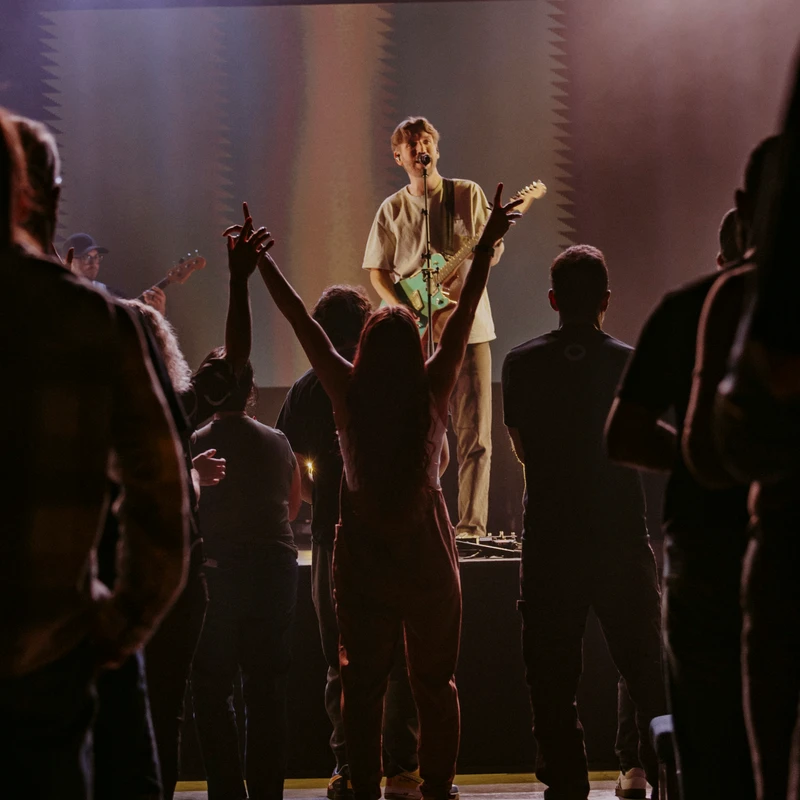
Worship is so much more than something we do—it’s the essence of who we are. As believers, one of the primary ways we express our love for the Lord is through worship, and as a ministry that is our primary calling—to lift high the name of Jesus so that others may enter into a place of love, adoration, and reverence.

Powerful, Impactful Teaching

Powerful, Impactful Teaching

Our teaching is designed to help everyone develop an intimate, accurate, and growing relationship with God. We know that we can be transformed by the life and teachings of Jesus, and we believe that the Holy Spirit has a powerful ministry for you to experience.

Jesus-Centered Fun for Kids

Jesus-Centered Fun for Kids

Learning about the power and significance of Easter through fun, engaging activities for kids 2 months to 5th grade.